


The School of Education FACE has been in Freiburg for almost seven years now. Many students of teacher education and teachers are familiar with the “School” from various contexts. In an article for the summer edition of UNIversalis, we show in which areas the School of Education FACE is active and how it enriches the educational landscape with new ideas in collaboration with other stakeholders.
In 2018, a four-year collaboration between the University of Freiburg and the University of Education Freiburg, the Freiburg Advanced Center for Education (FACE), led to the founding of the School of Education FACE, which has also included the Freiburg University of Music since 2019.
In this joint scientific institution, the participating universities combine their respective strengths in the field of teacher education in Freiburg: The school offers students of teacher education comprehensive support and advice on their path to successful graduation. There are both joint (third-party funded) research projects within the network as well as individual projects at the participating universities in the field of educational research, which are linked together. Important elements for sustainable teacher education are being further developed scientifically, e.g. digitalisation, professional relevance and internationalisation. The transfer of these findings takes place through continuing education and training opportunities for teachers and in cooperation with a school network. Young academics are supported in research groups such as the interdisciplinary doctoral school WisE (Wissenschafts- und Evidenzorientierung im Lehrer*innenberuf | science and evidence orientation in the teaching profession).
Dialogue and cooperation with and among each other are essential and inherent to the School of Education FACE: the school’s board of directors consists of seven professors from all three universities, and the two office managers come from the university and the university of education. Here, the interfaces between them are constantly negotiated, coordinated and maintained, and the intertwining of specialist sciences, subject didactics and educational sciences is promoted.
However, cooperation takes place not only within the partner institutions, but also beyond: with the institutions and actors responsible for teacher training in all types of schools, such as the Regierungspräsidium Freiburg, the Seminaren für Ausbildung und Fortbildung der Lehrkräfte Freiburg and the Zentrum für Schulqualität und Lehrerbildung. One of the goals of coordination among the actors at the location is to promote coherence in teacher training. The inclusion of expertise from school practice is also of great importance, as demonstrated by the cooperation in the school network and especially with the university partner schools.
Networking with all stakeholders and in all directions ensures innovation in teacher training and at the same time creates a solid basis for long-term improvement in the quality of education.
In addition, there is cooperation with the other six Schools of Education in Baden-Württemberg. Originally developed from programmes such as the ‘Quality Offensive for Teacher Training’, the schools have established themselves as permanent structures through the Higher Education Funding Agreement. The Schools of Education in Heidelberg, Konstanz, Stuttgart/Ludwigsburg, Tübingen, Karlsruhe, Freiburg and now also Schwäbisch-Gmünd/Ulm form a constantly growing network that actively shapes education and teaching as a source of inspiration and plays a role in education policy. Especially in times of teacher shortages and current discussions about alternative routes into teaching and the associated challenges, quality assurance in teacher training is a central task.
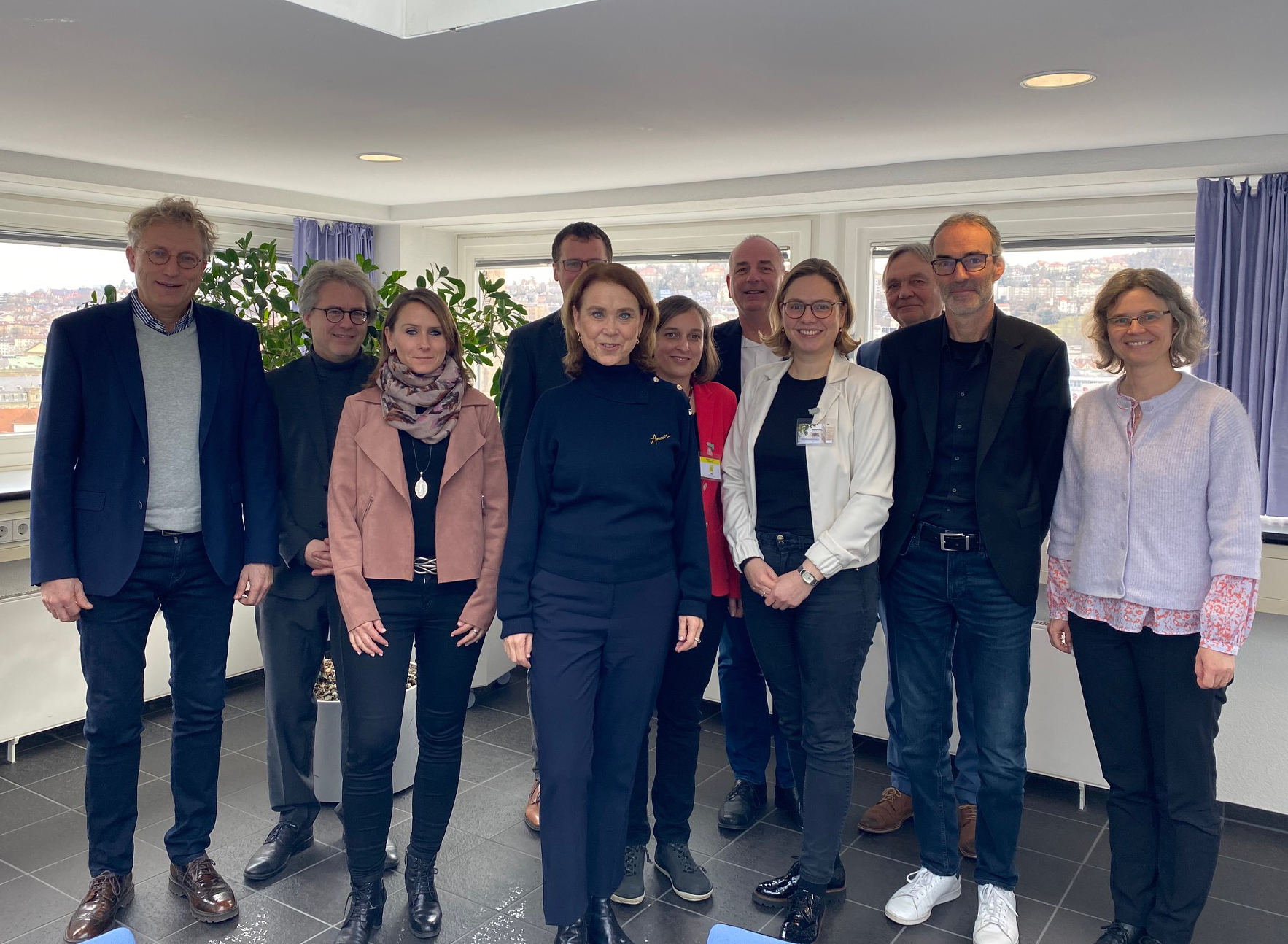
In statements and expert opinions, for example from the Standing Scientific Commissionof the minsters of education and cultural affairs or the German Science and Humanities Council (Wissenschaftsrat), the urgent need to ensure the quality of teacher training has been repeatedly emphasised. At the beginning of the year, the directors of the Schools of Education, including Prof. Dr. Katharina Loibl (Freiburg University of Education), Executive Director of the School of Education FACE, and Prof. Dr. Frank Bezner (University of Freiburg), Deputy Executive Director, presented eight key measures for quality assurance to the Minister of Science, Research, and the Arts, Baden-Württemberg, Petra Olschowski, in a joint discussion paper. The recommendations aim to take optimal account of the specific structures of teacher training in Baden-Württemberg and ensure that teacher training meets requirements not only quantitatively but above all qualitatively. ‘The exchange with the Minister was very open and constructive,’ reports Prof. Dr. Katharina Loibl. ‘We are delighted that she is very receptive to our recommendations. This is an important signal that our joint cooperation will be further strengthened.’
Another significant step towards jointly developed, scientifically based teacher training at the state level was the kick-off event organised in February 2025 to establish the Baden-Württemberg Teacher Training Network (Verbund Lehrkräftebildung Baden-Württemberg). In this state-wide association, teacher training colleges and ministries want to work together in future to provide innovative and high-quality teacher training and, last but not least, to increase the attractiveness of teacher training in Baden-Württemberg.
Promoting dialogue and strengthening cooperation also contributes to excellent teacher training. With its active, research-based and creative role, the School of Education FACE plays a decisive role in shaping the future of education. Here you can find more information about the initiative of the schools in Baden-Württemberg.
This article appeared in the summer 2025 issue of UNIversalis.